Paula Quaiser · Business Architect
Hi, how are you?
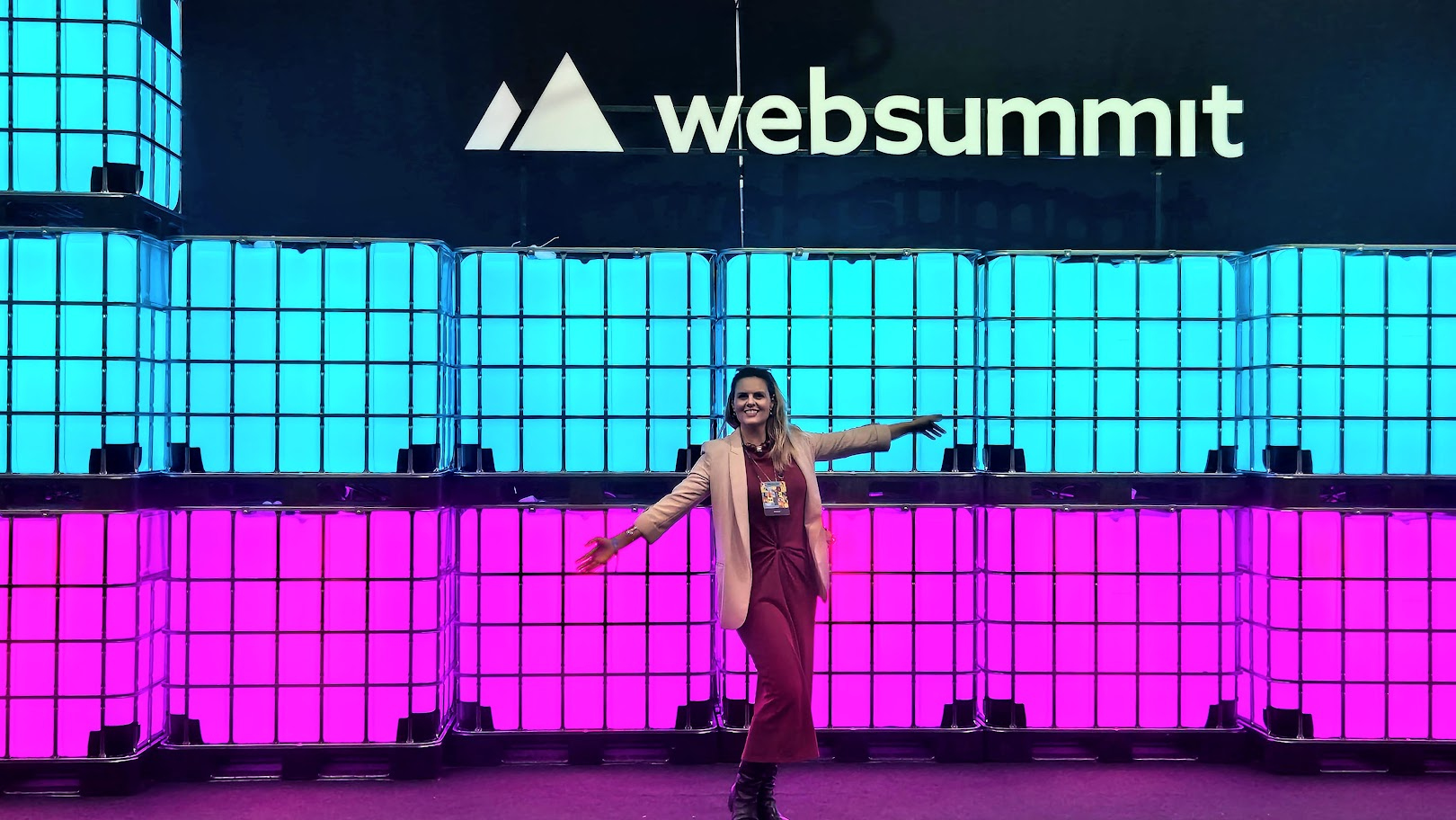
I attended Web Summit in Lisbon and, as a Business Architect, one question kept popping into my head: what can all this innovation change for entrepreneurs?
Let's face it: being impressed by technology at an event is one thing. Figuring out how to use it to build a real business is quite another!
I've picked seven examples presented or announced around the 2026 edition, based on official sources and news coverage. Shall we?
1. AI stepped out of the screen. Literally.
Still think AI is just a chatbot that answers questions? Well, get ready! At Web Summit's opening, nine humanoid robots from China's AgiBot danced in sync at MEO Arena, as reported by Euronews. Xynova introduced Prima 1 to Europe and brought Flex 2: two robotic hands designed to handle objects.
Hold on! This doesn't mean we'll have robots doing everything for us tomorrow (including the dishes). But AI is moving off our screens and into the physical world.
Think about your business: which repetitive tasks could you automate safely? Where do you still need a person? Before rushing out to buy a robot, understand the problem.
2. What if your next customer is an AI agent?
You want to buy a coat. You open fifteen tabs, compare prices and suddenly the entire afternoon is gone. Sound familiar?
Now imagine asking AI to do the research for you. That's the idea behind agentic commerce. Zalando CTO Graeme Smith discussed it at the Commerce Summit. Reuters had reported on 3 November that the company launched its first shopping agent, allowing purchases from other retailers through Zalando's app.
What does that have to do with your business? Everything! As well as winning over customers, your shop may need to give clear information to the AI helping them choose. See how that affects the channels and customer relationships blocks of the Canvas? And no, good human service hasn't lost its importance.
3. International meetings without the language mix-up
Anyone living abroad knows the feeling: a meeting starts in English, switches to Portuguese and ends in a language even Google Translate can't identify!
Otter.ai announced 27 additional languages. At the time, 13 were available, including Portuguese. The other 14 and transcription for meetings where people switch languages were still to be released.
Imagine paying attention to the conversation without taking notes on EVERYTHING! Less time writing minutes, more time putting ideas into practice. Just remember to get permission before recording and double-check the transcript. AI gets confused too!
Sources: [6]
4. A camera as a screening tool: the PITCH winner
What if a camera could help with health screening in just 30 seconds? That's the idea behind Carevision, founded by Amani Abulaban and winner of PITCH 2026. The startup presented technology using AI to analyse the face and estimate vital signs and cardiometabolic risk indicators.
Sounds like science fiction, right? But this is the company's proposal, not independent clinical proof of effectiveness. It doesn't replace a medical consultation.
What catches my attention is the value proposition: making screening easier to access. In healthcare, though, a brilliant idea isn't enough. You need evidence that it works, data protection and people's trust.
5. Fintech: payments needn't be the boring part of business
The other two finalists also deserve attention. Zambia's Zoyk presented a solution bringing together different payment methods, including mobile payments, to simplify management for small businesses. UK-based Moola presented an AI-powered personal financial planning platform. Different problems, one thing in common: turning fragmented processes into simpler decisions.
This illustrates a principle I believe in: innovation doesn't necessarily mean inventing a need. Often it's about removing barriers from a need that already exists. Entrepreneurs who observe everyday friction may uncover opportunities as interesting as those who invent technology from scratch.
6. Security and trust: who has the keys to your business?
Would you hand every company password to a new employee on their first day? I hope not! So why give an AI agent unlimited access?
Sumsub presented Know Your Agent, an initiative to help businesses define what their AI agents can access and do.
Another thing caught my attention. In a Linux Foundation survey of 225 leaders and founders of commercial open source software businesses, 72% reported a net positive AI impact, and 57% identified brand and trust as their leading competitive advantage. Those figures describe the surveyed group, but offer an interesting point to consider.
If more and more people can build technology, perhaps your greatest advantage lies in something far less technological: your customer's trust.
7. Not every innovation needs to start with AI
Phew! Finally, an idea that doesn't start with the letters A and I!
Portuguese founder Rita Marques struggled to find other women to surf with, especially in unfamiliar places. That's how Swella was born: a platform connecting surfers by location, plans and experience level. The startup announced its Web Summit presentation for 12 November.
Want an easy-to-understand value proposition? Here it is! A real problem, a specific audience and a solution that makes their lives easier. A record 350 Portuguese startups participated in the event. To me, this story is a reminder that a good idea can even begin at the beach!
Now, what do you do with all this?
According to the organisers, there were 70,003 attendees from 164 countries and 1,943 investors. A lot of people, a lot of ideas and probably a lot of business cards! But leaving with twenty new apps and no idea what to do with them won't get you far.
How about an exercise using the ROSA Method?
REALITY: what problem do you need to solve in your business?
OBJECTIVES: what outcome do you want?
SOLUTIONS: think of two or three alternatives. AI doesn't have to be involved!
ACTION: choose one assumption, run a small test and track results, costs and safety.
The point isn't to know EVERY tool. It's to choose the ones that actually make sense for your business.
So, tell me: which of these ideas would you like to test in your business? I love a good idea, but I love seeing a good idea actually work even more!
Warm wishes, and here’s to your next achievement!
Paula Quaiser